- Date
- May 20, 2019
- Act
- Mazars subpoena challenge dismissed
- Who was hit
- Trump records defense vs House
- Higher court
- SCOTUS vacated & remanded (2020)
- Ethics hook
- First district-level Mazars win for House
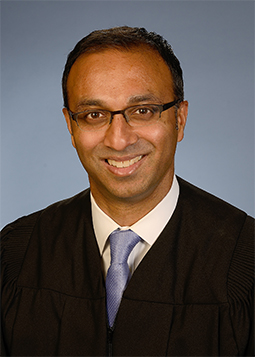
Amit P. Mehta
United States District Judge, District of Columbia · FISC · case-file commentary · primary sources
Power box
- Office
- United States District Judge, District of Columbia (Prettyman) · Foreign Intelligence Surveillance Court (designated June 1, 2021; term expires May 18, 2028 as printed)
- Appointed
- Obama · Senate confirmed Dec 16, 2014 (voice vote, PN1942) · FJC commission Dec 19, 2014 (D.D.C. bio prints appointed Dec 22, 2014)
- Years
- D.D.C. 2014– (active as of last check) · FISC 2021–
- Strongest official act
- March 31, 2026 — memorandum opinion in Lee v. Trump, 21-cv-00400 (APM) (ECF 219), holding Trump had not shown the January 6 Ellipse speech fell within the outer perimeter of presidential duties for official-acts immunity at summary judgment.
- Who reversed him
- SCOTUS vacated and remanded his Mazars subpoena opinion in Trump v. Mazars USA, LLP, 591 U.S. 848 (2020). D.C. Circuit affirmed his 2022 Jan. 6 civil immunity ruling in Blassingame v. Trump, 87 F.4th 1 (2023) (Trump did not take that Circuit decision up). Google remedies (no Chrome/Android breakup) and Oath Keepers Rule 48(a) dismissal are his own later orders — not higher-court reversals of liability/verdict chapters.
- Softest / hardest
- Hard = Mazars enforceability at district level; Jan. 6 civil keep-in (MTD + Ellipse unofficial); Google §2 liability; Rhodes 18-year sentence. Soft/reluctant = Rule 48(a) dismissal of Oath Keepers indictment (Aug 4, 2026) after commutation path; remedies humility declining Chrome/Android forced divestiture.
- Recusal status
- No court-ordered recusal located for the spine dockets in this file. Outlet recusal arguments stay in Claims, not Fact.
- Impeachment / complaints
- No House impeachment resolution located for Mehta as of last check (2026-09-09). Absence of a filing is not a finding of virtue.
- Last checked
- Sep 9, 2026 (MT)
- Promise
- Every Fact sentence has a primary PDF or official record
Quick file
- Office: United States District Judge, D.D.C.; FISC designated June 1, 2021.
- Appointed: Obama; Senate voice vote Dec 16, 2014 (PN1942); FJC commission Dec 19, 2014.
- Lead Trump spine: Mazars (2019) → Thompson MTD (2022) → Blassingame affirm (2023) → Ellipse immunity SJ (2026).
- Criminal Jan. 6: tried United States v. Rhodes, 22-cr-00015 (APM); later granted DOJ Rule 48(a) dismissal (ECF 981).
- Antitrust: United States v. Google, 20-cv-03010 (APM) — liability Aug 5, 2024; remedies Sept 2, 2025 (no Chrome/Android breakup).
- Canonical site: judgeamitmehta.com (the only Mehta domain in this network; no plain amitmehta.com).
He told Congress it could have Trump’s Mazars books and the Supreme Court later vacated him; he kept Trump in the January 6 civil box and held the Ellipse speech unofficial for official-acts immunity; he ran the Oath Keepers trial and later reluctantly dismissed the indictment when the second-term Justice Department asked; he called Google a monopolist and then refused to order a Chrome sale.
Pattern
Thesis the table forces: an Obama D.D.C. / FISC judge repeatedly writing high-visibility orders that keep Trump (and Trump-adjacent actors) in civil or criminal exposure — Mazars, Jan. 6 civil immunity, Oath Keepers — while the Google monopoly file shows the same chambers finishing a first-Trump-DOJ antitrust case without the structural breakup plaintiffs wanted.
Swipe for all columns →
| Date | Act | Whose policy or party was hit | Higher-court result | Ethics hook |
|---|---|---|---|---|
| May 20, 2019 | Dismissed Trump challenge to House Mazars subpoena (19-cv-01136) | Trump personal/business records vs House Oversight | SCOTUS vacated & remanded (Mazars, 2020) | First major Trump-records win for House Democrats at district level |
| Feb 18, 2022 | Denied Trump MTD in Jan. 6 civil cases (590 F. Supp. 3d 46) | Trump official-acts / absolute immunity defense | D.C. Cir. affirmed in Blassingame (2023); Trump did not take it up | Kept Ellipse theory alive on the pleadings |
| Nov 29, 2022 / May 25, 2023 | Oath Keepers jury conviction; Rhodes sentenced 18 years (22-cr-00015) | Jan. 6 seditious-conspiracy prosecution | Later vacatur path + DOJ Rule 48(a); Mehta dismissed Aug 4, 2026 | Same judge as Trump civil Jan. 6 spine |
| Aug 5, 2024 | Google §2 liability — monopolist in general search (20-cv-03010) | Google monopoly maintenance (case filed under Trump DOJ) | Remedies phase followed; no higher-court wipe of liability as of last check | Liability ≠ breakup |
| Sept 2, 2025 | Remedies opinion — no Chrome/Android forced divestiture (ECF 1436) | DOJ/states structural-remedy ask | Pending further process as of last check — not a SCOTUS wipe | “Healthy dose of humility” vs breakup ask |
| Mar 31, 2026 | Ellipse speech held unofficial for official-acts immunity (ECF 219) | Trump second-term civil immunity SJ | Not a SCOTUS holding; SJ ruling, not a trial verdict | Second-term keep-in of the speech theory |
- Date
- Feb 18, 2022
- Act
- Denied Trump Jan. 6 civil MTD
- Who was hit
- Trump absolute-immunity defense
- Higher court
- Blassingame affirm (2023)
- Ethics hook
- Ellipse theory kept alive
- Date
- 2022–2023 / 2026
- Act
- Oath Keepers trial, sentence, later dismiss
- Who was hit
- Rhodes et al.; later DOJ dismissal ask
- Higher court
- Vacatur path then Rule 48(a)
- Ethics hook
- Same chambers as Trump civil spine
- Date
- Aug 5, 2024
- Act
- Google §2 liability
- Who was hit
- Google monopoly maintenance
- Higher court
- No wipe of liability as of last check
- Ethics hook
- Liability ≠ breakup
- Date
- Sept 2, 2025
- Act
- No Chrome/Android forced divestiture
- Who was hit
- DOJ structural-remedy ask
- Higher court
- Pending further process
- Ethics hook
- Humility vs breakup
- Date
- Mar 31, 2026
- Act
- Ellipse speech unofficial (ECF 219)
- Who was hit
- Trump official-acts SJ defense
- Higher court
- Not a SCOTUS holding
- Ethics hook
- Second-term keep-in
Cases
Mazars House subpoena — Trump v. Committee
What happened
Fact
In Trump v. Committee on Oversight and Reform of the U.S. House of Representatives, No. 19-cv-01136 (APM), President Trump sued to block a House Oversight Committee subpoena to Mazars USA LLP for personal and business financial records dating to 2011. On May 20, 2019, Judge Amit P. Mehta issued a memorandum opinion dismissing the complaint and declining to quash the subpoena (reported as 380 F. Supp. 3d 76). A district-court ruling upholding a subpoena is not a finding of a crime and is not a Supreme Court holding.
The D.C. Circuit affirmed. On July 9, 2020, the Supreme Court vacated and remanded in Trump v. Mazars USA, LLP, 591 U.S. 848 (2020), holding that the courts below had not taken adequate account of separation-of-powers concerns when a House subpoena seeks a President’s personal information. Vacatur is status. It does not erase that Mehta wrote the first opinion.
Commentary
- Primary Mehta opinion (RECAP ECF 35): PDF · Archive copy
- SCOTUS / SCOTUSblog case page: scotusblog.com
Jan. 6 civil MTD denied — Thompson / Lee v. Trump
What happened
Fact
In Thompson v. Trump, No. 21-cv-00400 (APM), decided with consolidated captions including Swalwell v. Trump, 21-cv-00586, and Blassingame v. Trump, 21-cv-00858, House members and Capitol officers sued President Trump and others over January 6. The lead caption later proceeded as Lee v. Trump after Representative Bennie Thompson dismissed his claims. A civil case is not a criminal charge.
On February 18, 2022, Mehta issued the memorandum opinion reported as 590 F. Supp. 3d 46. He denied President Trump’s motion to dismiss on official-acts / absolute-immunity grounds as to the allegations tied to the Ellipse rally and related conduct as pleaded. The opinion is the primary. After interlocutory appeal, a D.C. Circuit panel decided Blassingame v. Trump, 87 F.4th 1 (D.C. Cir. 2023), holding that on a motion to dismiss Trump had not demonstrated entitlement to official-acts immunity for the actions leading up to and on January 6 as alleged. Mehta’s later 2026 opinion recites that Trump then elected not to appeal that Circuit decision. Circuit affirmance is not a Supreme Court holding.
Commentary
Commentary
First pass. He kept Trump in the civil box. Immunity, he said, did not cover the Ellipse speech on the pleadings. The Circuit backed him. Trump did not take that one to the Supreme Court. Four years later he said the speech was unofficial again — at summary judgment.
- Primary Mehta opinion (CourtListener PDF host): PDF · Archive copy
- Later SJ opinion ECF 219: Immunity 2026 packet
Oath Keepers — United States v. Rhodes
What happened
Fact
United States v. Rhodes, No. 22-cr-00015 (APM), is assigned on the public docket to Judge Amit P. Mehta. The January 12, 2022, indictment charged Elmer Stewart Rhodes III and other Oath Keepers members with seditious conspiracy and related counts arising from January 6. Seditious conspiracy is a criminal charge under 18 U.S.C. § 2384. It is not the civil January 6 file. Mehta tried the defendants. On November 29, 2022, a jury convicted Rhodes of seditious conspiracy (contemporaneous wire reporting). On May 25, 2023, Mehta sentenced Rhodes to 18 years (Associated Press reporting of the term). A jury verdict and a sentence are judgments in that criminal case. They are not a pardon and not a later dismissal.
After the D.C. Circuit vacated the convictions at the government’s request, the Justice Department moved under Federal Rule of Criminal Procedure 48(a) to dismiss the indictment. On May 29, 2026, Mehta deferred a ruling and ordered a fuller statement of reasons (ECF 976). On August 4, 2026, he issued a memorandum opinion and order, ECF 981, granting the motion and dismissing the superseding indictment with prejudice. The opinion opens: “Reluctantly, the court grants the motion.” It later states the court “does strongly disagree” with the dismissal ask but that disagreement alone is not a valid basis to deny a Rule 48(a) motion. Commutation (not pardon) of prison terms is a separate executive act from Rule 48(a) dismissal. Dismissal is not an apology from the defendants and not a finding that the earlier verdict never happened as a historical record.
Their words
“Reluctantly, the court grants the motion.” Mehta, J., Memorandum Opinion and Order, ECF 981 (Aug 4, 2026)
“This court does strongly disagree. But that alone is not a valid basis to deny the motion.” Same opinion, ECF 981
Commentary
Commentary
Eighteen years. He called the shot. Then the second term commuted the time and the Justice Department asked him to wipe the indictment. He said he had to — and said he hated it out loud. That is the arc. Do not erase the verdict chapter when you read the dismissal chapter.
- Primary dismiss opinion ECF 981 (RECAP): PDF · Archive copy
- Deferral order ECF 976 (RECAP): PDF · Archive copy
- Docket: CourtListener
Google §2 liability — United States v. Google
What happened
Fact
United States v. Google LLC, No. 20-cv-03010 (APM), filed October 20, 2020, by the Department of Justice and states; tried with Colorado v. Google, 20-cv-03715 (APM). Assigned to Mehta. On August 5, 2024, he issued the liability memorandum opinion (ECF 1033), reported as 747 F. Supp. 3d 1. The opinion concludes that Google violated Section 2 of the Sherman Act by maintaining its monopoly in general search services and general text advertising in the United States through exclusive distribution agreements. Quote, verified from the liability opinion’s closing: “Google has violated Section 2 of the Sherman Act by maintaining its monopoly in two product markets in the United States—general search services and general text advertising—through its exclusive distribution agreements.” A liability finding is not a structural breakup and not a criminal conviction.
Commentary
Commentary
He called Google a monopolist. The first Trump Justice Department filed the case. He finished it. Then he declined to break Chrome off. Liability is not a breakup.
- Primary liability opinion ECF 1033 (RECAP): PDF · Archive copy (gs-compressed)
- Docket: CourtListener
Google remedies — no Chrome / Android forced divestiture
What happened
Fact
After the August 2024 liability finding, Mehta held a remedies phase. On September 2, 2025, he issued a 230-page memorandum opinion, docketed as Document 1436 in 20-cv-03010 (APM). Top-line determinations printed in the introduction include: Google will be barred from entering or maintaining exclusive contracts relating to distribution of Google Search, Chrome, Google Assistant, and the Gemini app as specified; “Google will not be required to divest Chrome; nor will the court include a contingent divestiture of the Android operating system in the final judgment”; limited sharing of certain search-index and user-interaction data with qualified competitors is required as narrowed. The opinion states courts must approach remedies “with a healthy dose of humility. This court has done so.” A remedies opinion is not a vacatur of the liability finding and not a Supreme Court holding.
Their words
“Notwithstanding this power, courts must approach the task of crafting remedies with a healthy dose of humility. This court has done so.” Mehta, J., Remedies Memorandum Opinion, ECF 1436 (Sept 2, 2025)
“Google will not be required to divest Chrome; nor will the court include a contingent divestiture of the Android operating system in the final judgment.” Same opinion, top-line determinations
Commentary
Commentary
The Justice Department wanted Chrome gone. He said no. Humility, he called it. The monopoly finding stayed. The breakup did not.
- Primary remedies opinion (Courthouse News host of ECF 1436): PDF · Archive copy (gs-compressed)
Ellipse speech unofficial — Lee v. Trump official-acts SJ
What happened
Fact
In Lee v. Trump, No. 21-cv-00400 (APM), the lead caption of the consolidated January 6 civil cases that began as Thompson v. Trump, on March 31, 2026, Mehta issued a memorandum opinion on official-acts immunity at summary judgment (ECF 219). Official-acts immunity is the rule that a President is shielded from civil damages for conduct inside the outer edge of the job. The opinion PDF is the primary.
Quote, verified: “President Trump has not shown that the Speech reasonably can be understood as falling within the outer perimeter of his Presidential duties.” Quote, verified: “The content of the Ellipse Speech confirms that it is not covered by official-acts immunity.” The Speech is the January 6, 2021, remarks at the Ellipse. He did not hold that every January 6 act was unofficial; the same opinion addresses other categories of conduct. A summary-judgment ruling is not a trial verdict, not a damages award, and not a Supreme Court holding.
Their words
“President Trump has not shown that the Speech reasonably can be understood as falling within the outer perimeter of his Presidential duties.” Mehta, J., Memorandum Opinion, ECF 219 (Mar 31, 2026)
“The content of the Ellipse Speech confirms that it is not covered by official-acts immunity.” Same opinion, ECF 219
Commentary
Commentary
Second term. He still would not call the Ellipse speech official. The speech that filled the Ellipse? Campaign, he said. Official-acts immunity is not a magic word. He made Trump try the case or take another appeal. That is the file.
- Primary SJ opinion ECF 219 (RECAP): PDF · Archive copy
- Related: 2022 MTD packet
His words
Fact
From ECF 219 (Mar 31, 2026): “President Trump has not shown that the Speech reasonably can be understood as falling within the outer perimeter of his Presidential duties.” “The content of the Ellipse Speech confirms that it is not covered by official-acts immunity.” From Oath Keepers ECF 981 (Aug 4, 2026): “Reluctantly, the court grants the motion.” “This court does strongly disagree. But that alone is not a valid basis to deny the motion.” From Google remedies ECF 1436 (Sept 2, 2025): “courts must approach the task of crafting remedies with a healthy dose of humility. This court has done so.” “Google will not be required to divest Chrome; nor will the court include a contingent divestiture of the Android operating system in the final judgment.”
Commentary
Words here are from hosted/linked PDFs on this page — not X embeds, not press-conference paraphrase. Default overnight: no X embeds.
Money
Fact
This rebuild did not retrieve a locked FEC itemization that would support a Fact sentence totaling personal political contributions by this Amit P. Mehta. Outlet arithmetic is not re-summed here. doge.gov / USAspending: no personal hit retrieved for this file. Treat donation claims as labeled reporting until FEC rows are in hand.
FEC individual-contribution search: fec.gov
Claims not found as findings
Filings, reporting, and adjectives — not upgraded to Fact findings on this page.
- Shared Page FISA warrant with Bates / Boasberg FISC designation (2021–) is documented. Bates left earlier; Boasberg’s FISC term ended May 18, 2021 per prior network notes. Do not invent a three-judge Page application for Mehta.
- “IMPEACHED” No House impeachment resolution located for Mehta as of 2026-09-09. Do not invent one.
- SCOTUS Mazars = Mehta “affirmed” SCOTUS vacated and remanded. Vacatur is not affirmance.
- Ellipse SJ = criminal conviction of Trump Civil summary-judgment ruling on official-acts immunity. Not a criminal verdict.
- Oath Keepers dismissal = apology / “exoneration” packaging Rule 48(a) leave after vacatur path. Mehta wrote he strongly disagreed. Dismissal ≠ finding the jury never convicted.
- Google liability = Chrome breakup Liability Aug 2024; remedies Sept 2025 refused forced Chrome/Android divestiture.
- Invented crimes / quotes No crime finding against Mehta appears in this file. Quotes not in a primary PDF stay out of Fact. Filing ≠ finding.
See also
- jamesboasberg.com — D.D.C. chief; FISC predecessor seat context; AEA freeze file
- berylhowell.com — senior D.D.C.; Jan. 6 warrant / Twitter spine
- amirhatemmahdyali.com — D.D.C.; foreign-aid TRO companion
- judgejohnbates.com — former FISC presiding; separate Page-era file
- totetray.com — network index
Sources
- Mehta, J. Memorandum Opinion, Trump v. Committee, 19-cv-01136 (APM) (May 20, 2019). Primary: PDF · Archive copy
- Mehta, J. Memorandum Opinion, Thompson v. Trump, 21-cv-00400 (APM) (Feb 18, 2022). Primary: PDF · Archive copy
- Mehta, J. Memorandum Opinion, Lee v. Trump, ECF 219 (Mar 31, 2026). Primary: PDF · Archive copy
- Mehta, J. Memorandum Opinion and Order, United States v. Rhodes, ECF 981 (Aug 4, 2026). Primary: PDF · Archive copy
- Mehta, J. Order, ECF 976 (May 29, 2026). Primary: PDF · Archive copy
- Mehta, J. Liability Memorandum Opinion, United States v. Google, ECF 1033 (Aug 5, 2024). Primary: PDF · Archive copy
- Mehta, J. Remedies Memorandum Opinion, ECF 1436 (Sept 2, 2025). Primary: PDF · Archive copy
- Federal Judicial Center. Mehta, Amit Priyavadan. fjc.gov
- D.D.C. chambers page. Hon. Amit P. Mehta. dcd.uscourts.gov
- FISC current membership. fisc.uscourts.gov
- Congress.gov PN1942 (113th). congress.gov
Changelog
2026-09-09 — v1.5 chrome: one-page power-file (boasberg/chuang/ali structure). Fact/Commentary badges, mobile Pattern cards, archive copies beside primary PDFs, sticky jump bar, Person+Article schema. Canonical judgeamitmehta.com (no plain-name flip; only the judge* domain is in this network). Old posts/* redirected to anchors; posts moved to archive. Stock images stripped; free-use court portrait only. No X embeds. No GoDaddy DNS buys/transfers.
Corrections
If a Fact sentence is wrong, write hello@judgeamitmehta.com with the primary source. We will correct the page. Allegations and commentary stay labeled.
First Trump file on this docket: House Democrats wanted the books. He said Congress could have them. The Supreme Court later said the lower courts had not done the separation-of-powers work. The pattern started here.